

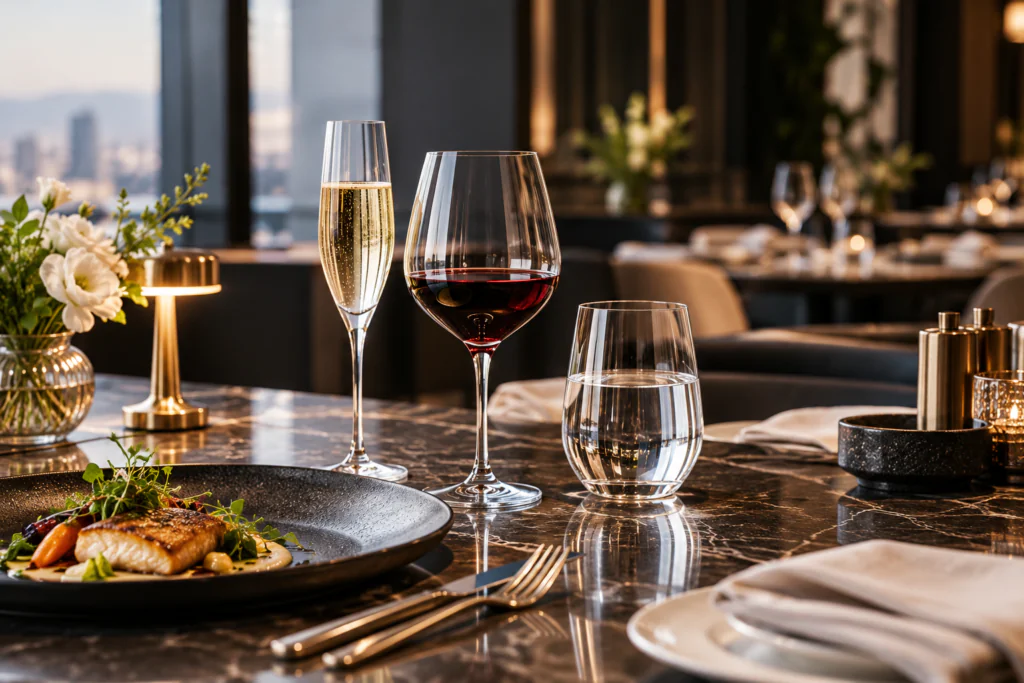
Choosing hotel glassware means balancing four things: how the glass looks on the table, what you will pour into it, how well it survives daily service, and how easily you can replace it. A luxury hotel rarely needs just one range. The fine-dining restaurant, the all-day café, the lobby lounge, the bar and the banquet hall each ask something different of a glass.
This guide is for hotel owners, F&B managers and procurement teams buying glassware for a new opening, a renovation or a replacement order. It covers glass types, how to choose by venue, the difference between glass and crystal, how much stock to plan for, and what to ask your supplier.
Why Is Glassware Important in Luxury Hospitality?
Hotel glassware is one of the few items a guest holds in their hand for the whole meal. Next to the plate and cutlery, it shapes the look of the table and how guests experience a drink.
The shape of a glass also does a job. A wide bowl gives a red wine room to breathe. A narrow flute keeps sparkling wine lively for longer. A heavy-based tumbler feels steady in the hand at the bar. Picking the wrong shape is not a disaster, but guests who know their drinks will notice.
Then there is the operational side, which is easy to forget in a showroom:
- Stemware breaks more easily than a tumbler when trays are full.
- Every glass has to survive a commercial dishwasher or be polished by hand.
- Racks, shelves and bar back space are always limited.
- Breakage never stops, so the range you choose must still be available next year.
A beautiful glass that chips within a month, or that you cannot reorder, ends up costing more than a plainer one that lasts.
In the UAE there is one more layer: many outlets serve a large non-alcoholic menu. Mocktails, fresh juices, karak and Arabic coffee service all need suitable glassware too, alongside wine and spirits in licensed venues.
What Are the Different Types of Glassware Used in Hotels and Restaurants?
Browse hotel and restaurant glassware as you read.
Water Glasses and Tumblers
Water glasses are the most used glass in any hotel. In fine dining, a stemmed water goblet often sits beside the wine glasses. In all-day dining and cafés, a tumbler is more practical: it is stable, easy to stack where designed for it, and quick to wash.
When choosing, look at capacity, how the glass feels in the hand, how stable the base is, and whether it matches the rest of your tabletop. Many hotels choose a tumbler range that also covers juice and soft drinks to keep stock simple.
Wine Glasses
Most restaurants work with two or three shapes rather than one for every grape:
- Red wine glasses have a larger bowl, giving the wine more air and room for aroma.
- White wine glasses have a smaller bowl, which keeps the wine cooler for longer.
- An all-purpose glass can serve both and suits venues with a short wine list.
A thin rim feels refined but needs careful handling. A longer stem looks elegant but takes more space in storage racks. Match the selection to your actual wine programme, not to every possible variety.
Champagne Flutes and Sparkling-Wine Glasses
Flutes are still the default for toasts, banquets and celebrations, and their narrow shape holds the bubbles well. Many fine-dining restaurants and bars now also serve sparkling wine in a tulip-shaped or white wine glass, which shows more of the aroma. The coupe, with its wide shallow bowl, is mostly used for cocktails today. Choose the shape that fits your service style and the moment the glass is used.
Cocktail and Bar Glassware
Bar glassware takes the most handling, so practicality matters as much as looks:
- Highball glasses: tall and narrow, for long drinks, mocktails and soft drinks over ice.
- Rocks, lowball or old fashioned glasses: short with a heavy base, for spirits and short cocktails.
- Coupes, Nick & Nora and martini glasses: for stirred and shaken cocktails.
In a busy hotel bar or lounge, check how each glass handles ice, how it sits in the rack and how often it is likely to chip.
Specialty and Beverage-Specific Glassware
Some venues need glasses for one specific drink, such as beer, liqueurs, dessert wines or hot drinks like karak tea. Only add these where your menu needs them. Each extra shape adds to storage, stock counts and replacement orders.
How to Choose Glassware for Different Hospitality Settings
The same hotel can need four or five different glassware selections. Start with the venue, then the drinks it serves, then the glass.
| Venue | Main beverage service | Glass types to plan | Check before buying |
| Fine-dining restaurant | Wine pairing, water, sparkling | Water goblet, red and white wine glasses, flute | Clarity, thin rim, balance, careful handling |
| All-day dining | Water, juice, soft drinks | Tumblers, juice glasses | Stability, fast washing, easy replacement |
| Bar and lounge | Cocktails, mocktails, spirits | Highball, rocks, coupe or Nick & Nora | Handling, ice, chip resistance, rack fit |
| Banquets and events | Water, welcome drinks, toasts | One water glass, one wine glass, flute | Standardised range, stock depth, transport |
| In-room dining | Water, wine, juice | Tumbler, all-purpose wine glass | Safe to carry on trays, matches room style |
Glassware for Luxury Hotels
A luxury hotel has to balance character and consistency. Each outlet may have its own concept, but guests still expect the same quality wherever they are. Many hotels choose one core range for water and wine across all outlets, then add signature glasses for the fine-dining room and bar. This keeps luxury hotel glassware coordinated with the hotel’s design, simplifies reordering and makes it easier to move stock between outlets during busy periods.
Glassware for Fine-Dining Restaurants
Guests at a fine-dining table notice proportion, clarity and the thickness of the rim. Fine-dining glassware should suit the menu and wine programme and sit comfortably beside beside premium dinnerware and cutlery. Finer glasses need more care, with hand polishing, gentle racking and trained staff, so weigh that alongside the look.
Glassware for Hotel Bars and Lounges
Bar glasses are used, washed and reused many times in one evening. Choose a focused range of highballs, rocks glasses and one or two cocktail shapes rather than a large collection. Check how each glass fits the bar’s racks and back shelf, and keep the same shapes across the bar so service looks consistent.
Glassware for Banquets and Events
Banquets need volume and uniformity: hundreds of place settings that all match. Use a small, standard range, plan quantities for your largest event, and allow for glasses in transit, in washing and broken during service. Storage and transport crates are as important as the glass itself.
These are starting points. The right selection always depends on each venue’s menu, volume and style.
Glass vs Crystal Glassware: Which Should You Choose?
Three material terms come up most when buying commercial glassware:
- Soda-lime glass is the most common everyday glass in hospitality.
- Tempered glass has been heat-treated to resist impact and sudden temperature changes. Some commercial glasses are fully tempered; others only have a strengthened rim, so check which one you are buying.
- Crystal, often used for premium glassware for restaurants, is chosen for clarity and the way it catches light. Traditional lead crystal contains lead oxide, while lead-free crystal uses other minerals and is the usual choice for hospitality.
| Selection factor | Standard glassware | Crystal or lead-free crystal |
| Appearance | Varies by product and finish | Often chosen for clarity and brilliance |
| Weight and feel | Depends on construction | Varies by design and composition |
| Durability | Depends on material, thickness and treatment | Depends on composition and design; do not assume it is stronger |
| Typical considerations | Practicality, handling, replacement cost | Presentation, intended use, careful handling |
| How to decide | Venue needs and product specification | Venue needs and product specification |
The label alone does not tell you how a glass will perform in service. Read the product specification, the intended use and the care instructions before you commit.
Key Factors to Consider Before Buying Commercial Glassware
Design, Shape and Capacity
Match each glass to the drink and the moment it is served. Check height, bowl shape, rim and the usable capacity, not just the brim-full figure. The design should also sit well with your plates, cutlery and table linen.
Material, Quality and Durability
Review the material and specification of each item. Look at how the rim and base are made, and whether the glass is designed for frequent commercial use. A glass that looks premium is not automatically suited to high-volume service.
Cleaning and Maintenance
Confirm the manufacturer’s dishwasher and care instructions for professional glassware, then compare them with the equipment and routine you actually have. Think about drying, polishing and how glasses will be carried from the wash area back to service.
Storage and Operational Practicality
Measure your racks, shelves and bar back before ordering. Stack glasses only if the product is designed for stacking. Ask how easy it will be to get replacement pieces of the same item later.
Budget and Long-Term Purchasing
For bulk glassware for hotels, look beyond the unit price. Compare opening stock, the breakage allowance you will need and the cost of replenishing over a year or two. A slightly higher price for a glass that lasts longer and stays in production can work out cheaper overall.
How Much Glassware Does a Hotel or Restaurant Need?
There is no single formula that works for every venue. The right quantity comes from how your outlet actually runs. Work through these factors for each type of hotel glassware:
| Planning factor | What to assess |
| Seating capacity | How many guests you serve at one time |
| Beverage menu | Which drinks you offer and how often each is ordered |
| Service turnover | How many times tables turn in a service and how fast glasses come back |
| Washing cycle | How long glasses spend being washed, dried and polished |
| Event requirements | Extra demand during banquets, holidays and peak periods |
| Replacement stock | An allowance based on your real breakage and loss figures |
For every glass in a guest’s hand, others are in the dishwasher, on the drying rack or waiting on a shelf. A venue with a slow wash cycle and fast table turns needs more stock per seat than a calm dining room with plenty of washing capacity.
After the first few months, track breakage by glass type. Real figures are always better than any rule of thumb for planning your next order.
How to Create a Coordinated Luxury Tabletop Setting
Hotel glassware works best when it is chosen alongside everything else on the table, not on its own:
- Match the style. A clean, modern glass suits minimalist plates; a cut or detailed glass suits classic dinnerware and silver.
- Choose shapes that look like one family when set together, even though each has its own job.
- Look at the glass under the room’s own lighting and against its table linen.
- Keep the number of shapes low, to simplify ordering, storage and staff training.
- Use the same core range across restaurants where each concept allows it.
Renarte’s premium tabletop collection brings glassware together with dinnerware for hospitality settings and cutlery for fine-dining restaurants, along with luxury tabletop accessories, so the full table can be planned with one supplier.
How to Source Glassware for Hotels and Fine-Dining Restaurants
A clear process for sourcing glassware for hotels and restaurants saves time and avoids costly reorders:
- List each outlet with its seating, service style and beverage menu.
- Decide the shapes, capacities and materials each venue needs.
- Compare products on quality, suitability for your service, care requirements and price.
- Ask for samples or product documentation, then test samples on a real table, through your own dishwasher and in your staff’s hands.
- Agree order quantities, lead times, packaging and how replacements will be supplied.
- Check the glassware against the dinnerware, cutlery and accessories you plan to use.
As a glassware supplier for hotels and restaurants in the UAE, Renarte supplies tabletop products, including hotel and restaurant glassware. Hospitality buyers can review the hospitality glassware range alongside dinnerware and cutlery when planning a new outlet or refreshing an existing one.
Frequently Asked Questions
How do you choose the right glassware for a luxury hotel? Start with each outlet and its drinks menu, then choose shapes and materials that suit the service. Keep a core range across outlets for consistency and easier reordering.
What glassware is essential for a fine-dining restaurant? Most need a water goblet, red and white wine glasses (or an all-purpose wine glass) and a sparkling-wine glass. Add more only if the menu calls for them.
What is the difference between glass and crystal glassware? Crystal is chosen for clarity and brilliance. Everyday glass is usually soda-lime. Lead-free crystal avoids lead oxide. Neither is automatically more durable; check each product’s specification.
Is tempered glass suitable for commercial use? Tempered glass is heat-treated to resist impact and temperature changes, which suits busy service. Check whether the whole glass or only the rim is strengthened.
What should hotels look for when buying glassware in bulk? Consistent quality, care instructions that match your equipment, packaging, lead times and long-term availability so you can replace breakages with the same item.
How much glassware does a restaurant need? It depends on seating, menu, table turnover, washing time, events and breakage. Calculate per glass type from how the venue runs, then adjust using real breakage data.
How should commercial glassware be cleaned and maintained? Follow the manufacturer’s care instructions, use suitable racks, dry and polish carefully, and store glasses so they do not knock against each other.
How can glassware complement a restaurant’s tabletop design? Choose glasses that match the style of the plates and cutlery, keep the line-up to a coordinated family of shapes, and consider the room’s lighting and linen.
Explore Glassware and Tabletop Solutions with Renarte
The right glassware balances your venue’s design, beverage service, daily operations and purchasing needs.
Looking for glassware for a hotel, fine-dining restaurant or hospitality project? Explore Renarte’s Tabletop collection or discuss your hospitality requirements with the team.
Final Thoughts
Good hotel glassware is chosen by use first, then by material, presentation and how it will be handled every day. Plan quantities from how each venue really runs, and choose ranges you can replace for years, not months. When you are ready to compare options, start with Renarte’s hotel and restaurant glassware.
One Response